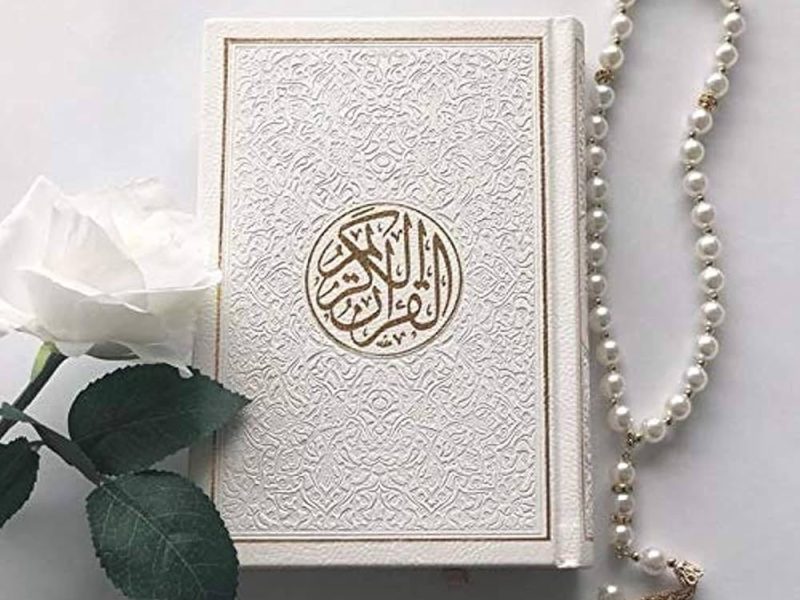
{يَا أَيُّهَا الْمُزَّمِّلُ (1) قُمِ اللَّيْلَ إِلَّا قَلِيلًا (2) نِصْفَهُ أَوِ انقُصْ مِنْهُ قَلِيلًا (3) أَوْ زِدْ عَلَيْهِ وَرَتِّلِ الْقُرْآنَ تَرْتِيلًا}
[Al-Muzzammil: 1–4]
A majestic call, extended with a long elongation, while the Beloved is near…
What gentleness, what trust, what support—enfolding you, O Messenger of God.
The First Secret: The Detached Madd (al-Madd al-Munfaṣil)
The sūrah opens with a call that addresses the conscience, awakening one of the secrets of the Furqān—the very first secret embodied in a prolonged elongation, imbued with spirit and fragrance.
It is a detached madd—so how, then, does it become connected? Is not the One worshipped above seven layered heavens, while the worshipper stands in darkness and silence, wrapped in the night that has closed in upon him?
Indeed. Yet even if the call is prolonged, even if six counts of elongation become obligatory in recitation, the tāʾ of al-muzammil turns toward the zāy and is assimilated into it—and by God, this is the greatest glad tiding.
Behold the divine scene: a Lord calling His servant, who—had He willed—could have raised him instantly. Instead, He sent revelation down to him while he was cold and wrapped. Has it not been authentically reported that revelation would descend upon him and he would break into sweat? Where, then, is “the one wrapped”? That is one point.
As for the second: it is a gentle preparation and tenderness toward the Beloved in his state as one wrapped up. The word is lightened from its tāʾ and intensified in its zāy and mīm, breaking the laws of time and space—as if saying: We have come to you hastening.
Is not prayer a standing before the Most Generous? Glad tidings upon glad tidings. What, then, is the measure of the human being when time itself listens through him?
O you who are wrapped, listen well to this proclamation. From here, the mīm emerges to lead this exalted station.
As for the third: nearness is support, and nearness is reassurance. He called him, and he responded. Thus came the shaddah and the pause upon the mīm, drawing the receiver inward and preparing him to bear the task. Had it been light in weight, the mountains would not have crumbled beneath its burden.
The Second Secret: Standing (al-Qiyām)
As for the second secret—standing: was not the day made for livelihood and the night for rest? How, then, when the command here is one of obligation—except a little?
O contemplator of the verses, listen well, for He said: “a little… a little.”
As you recite two verses both ending with “a little… a little,” you sense mercy descending. The night is a whole, and the “little” is a part; part upon part divides the whole. Then He says: “decrease from it a little,” so it becomes half—minus a little. This is a concession following a firm command, from one perspective.
From another perspective, the verbal repetition—“a little… a little”—is a reminder not to forget your share of worldly life.
The Third Secret: The Major Ṣilah Madd (Madd aṣ-Ṣilah al-Kubrā)
As for the third secret—the Major Ṣilah Madd—it necessarily conceals a meaning hidden among the letters, which requires clarification.
This ṣilah madd rebalances the scale: what is reduced on one side is increased on the other. Reflect with me upon this beauty.
The Major Ṣilah Madd occurs when the pronoun hāʾ (third-person singular) lies between two vowels, provided that the second vowel is a hamzah; it is then elongated for six counts obligatorily.
Here, insights unfold: how a single rule of Qur’anic recitation becomes simultaneously a system of legislation, and how meanings are carefully selected and interwoven to reach the core intent. Do not separate the Sunnah from its source, and do not delve into meanings without grasping their structural foundations.
The word ṣilah itself suggests a bond—strengthening the connection between the servant and his Lord:
“The covenant between us and them is prayer; whoever abandons it has disbelieved.”
(Sunan al-Tirmidhī)
Between disbelief and Islam lies a saving path—establishing prayer. Since the context here concerns night prayer, the term al-kubrā (the greater) comes to further specify.
The word kubrā hints at seeking the greatest reward:
“The best prayer after the obligatory prayer is the prayer in the depth of the night.”
(Ṣaḥīḥ Muslim)
It suffices for a servant that his name knocks upon the gates of heaven:
{وَإِذْ تَأَذَّنَ رَبُّكُمْ لَئِن شَكَرْتُمْ لَأَزِيدَنَّكُمْ}
[Ibrāhīm: 7]
For it holds virtue, goodness, and a written promise within the verses.
The condition “between two vowels, the second being a hamzah” points to its proper time: if it lies between movements, then all the more reason it is established during the stillness of night:
{وَجَعَلْنَا اللَّيْلَ لِبَاسًا}
[An-Nabaʾ: 10]
Only the servants of the Most Merciful truly seize it.
The two movements suggest the movement of the servant to the ʿIshāʾ prayer and the movement to the Fajr prayer—between them lies a time of stillness. This accords with his saying ﷺ:
“The best hours are the last part of the night.”
(Ṣaḥīḥ al-Jāmiʿ)
As for the hamzah, from it emerges the birth of dawn, as in His saying:
{حَتَّىٰ يَتَبَيَّنَ لَكُمُ الْخَيْطُ الْأَبْيَضُ مِنَ الْخَيْطِ الْأَسْوَدِ مِنَ الْفَجْرِ}
[Al-Baqarah: 187]